Hi Stephane,
Thank you so much for taking the time to give me such a complete and helpful feedback. I really value this information. I’ll definitely reach out to you on LinkedIn to find a coach, as it could indeed be very useful. At the moment, we are trying to understand how we can use this tool in our project and how it could benefit us. Therefore, I believe that understanding the basics, the scope, and the vocabulary is important for us.
The hardware aspect is very classical in this industry, so I don’t believe that Capella would help us with the physical architecture (you have controllers, sensors, sticks, actuators, …). However, it might be very useful mainly for the software aspects, and also to help defining in details the softwares functionnalities of the aircraft. I will be also be very useful to define requirements such as “reaction time is less that 20ms …” and to validate them. Also, to choose the exact controler, sensor, … even though the physical architecture is already defined”.
First part of the answer
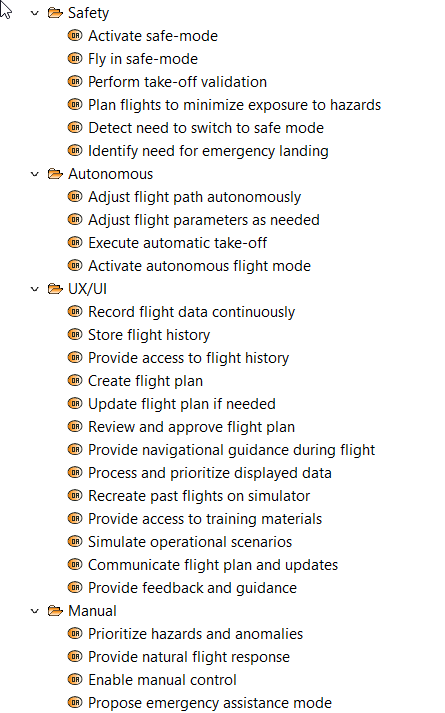
So, I tried to follow your advice and focused on one Operational Capability: Enable safe navigation during flight.
I choose the strategy to create one OAIB for each Capability.
Before taking your advices into account, I believe I had limited the possibilities in the OA, which was not the goal.
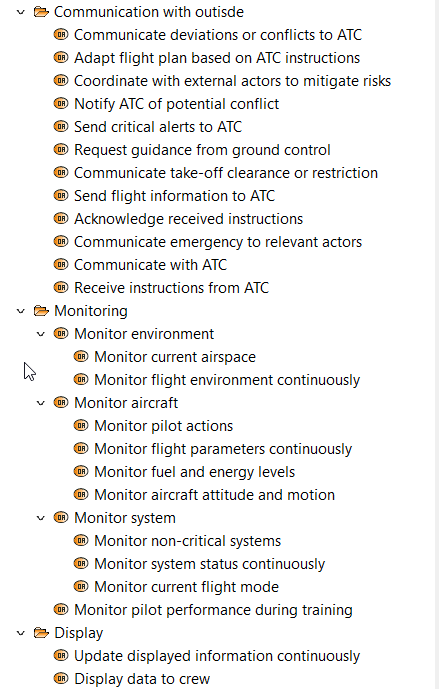
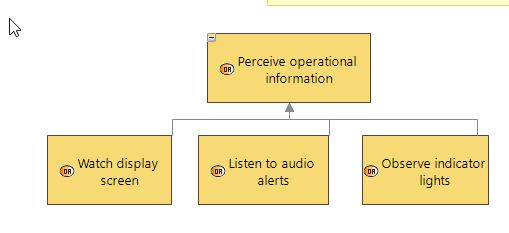
So now, instead of creating a high-level activity called “Watch display screen,” I created a high-level activity called “Perceive operational information,” which has three sub-activities. However, I will probably not use the sub-activities in the OA because it might limit other possibilities. Am I understanding this correctly?
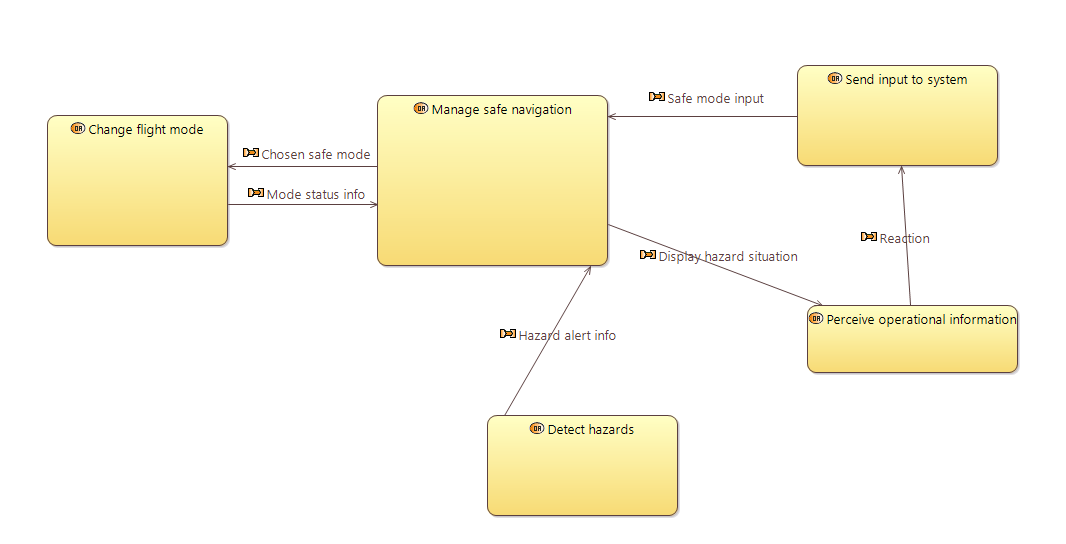
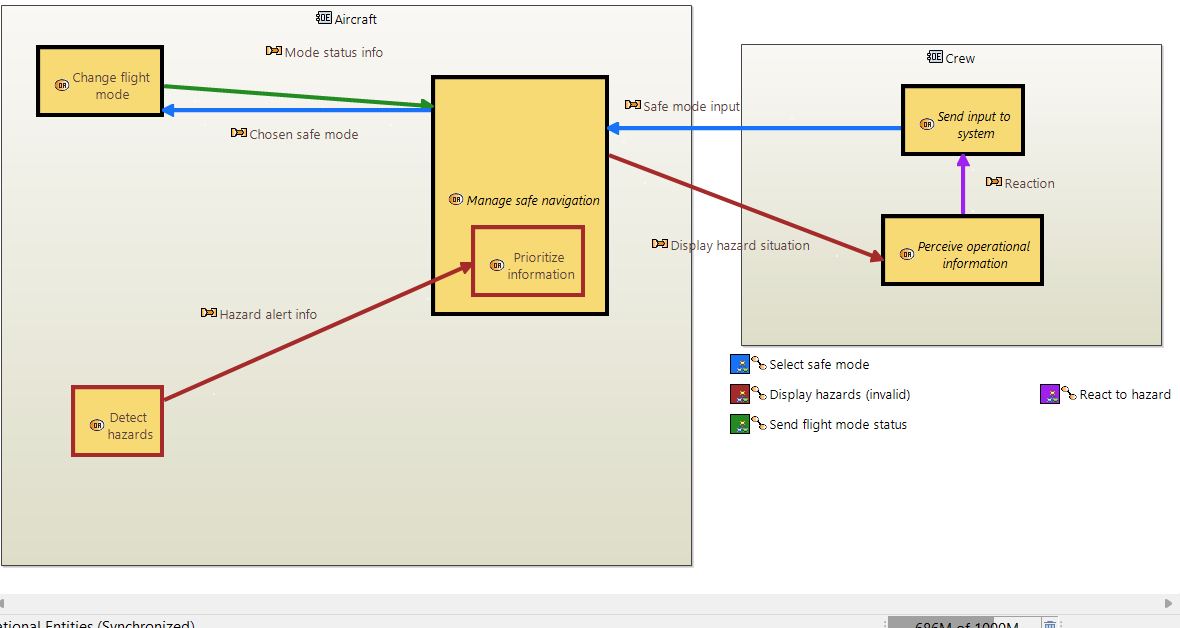
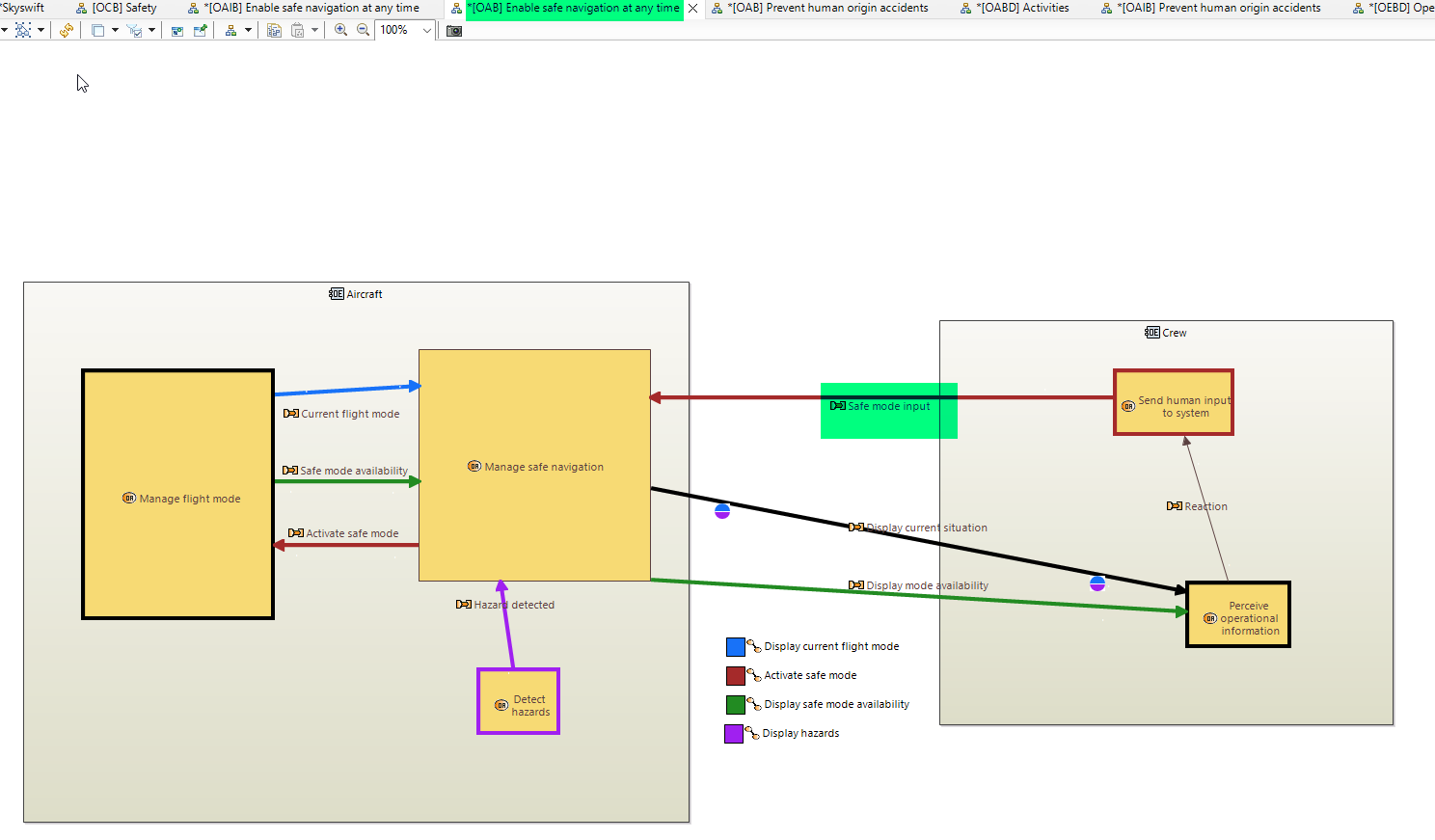
I created an OAIB to define interactions. The process was mainly iterative because, before having “Send input to system” and “Perceive operational information,” I only had “Select safe mode,” which is a very low-level activity and too restrictive. As you said, it was very iterative, and then you realize you might already be too specific, so you try to define a higher-level activity. Am I getting this right?
Im 2
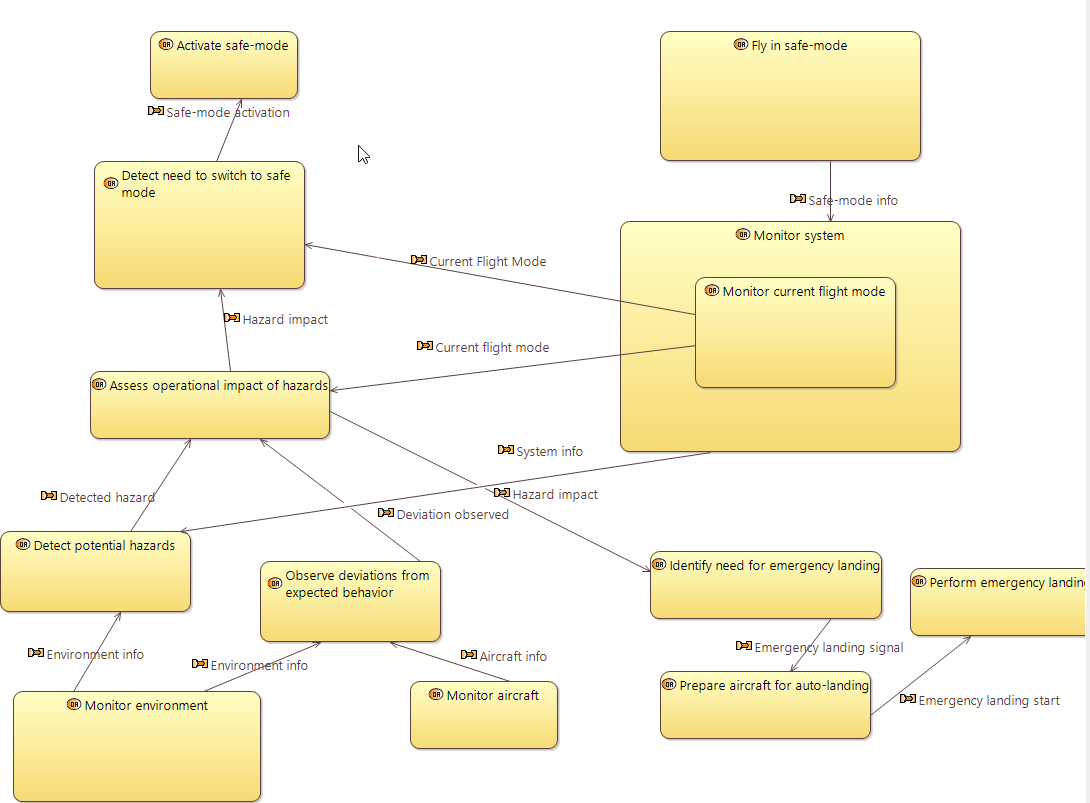
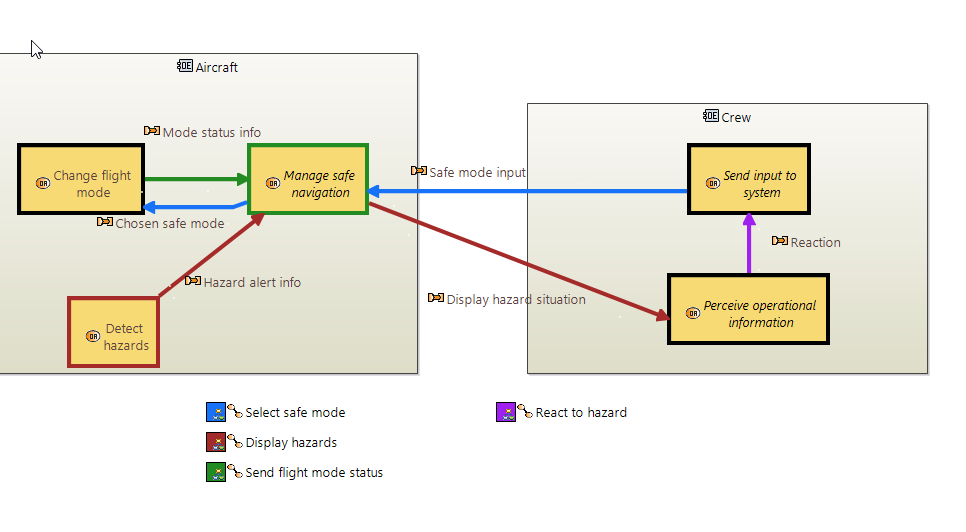
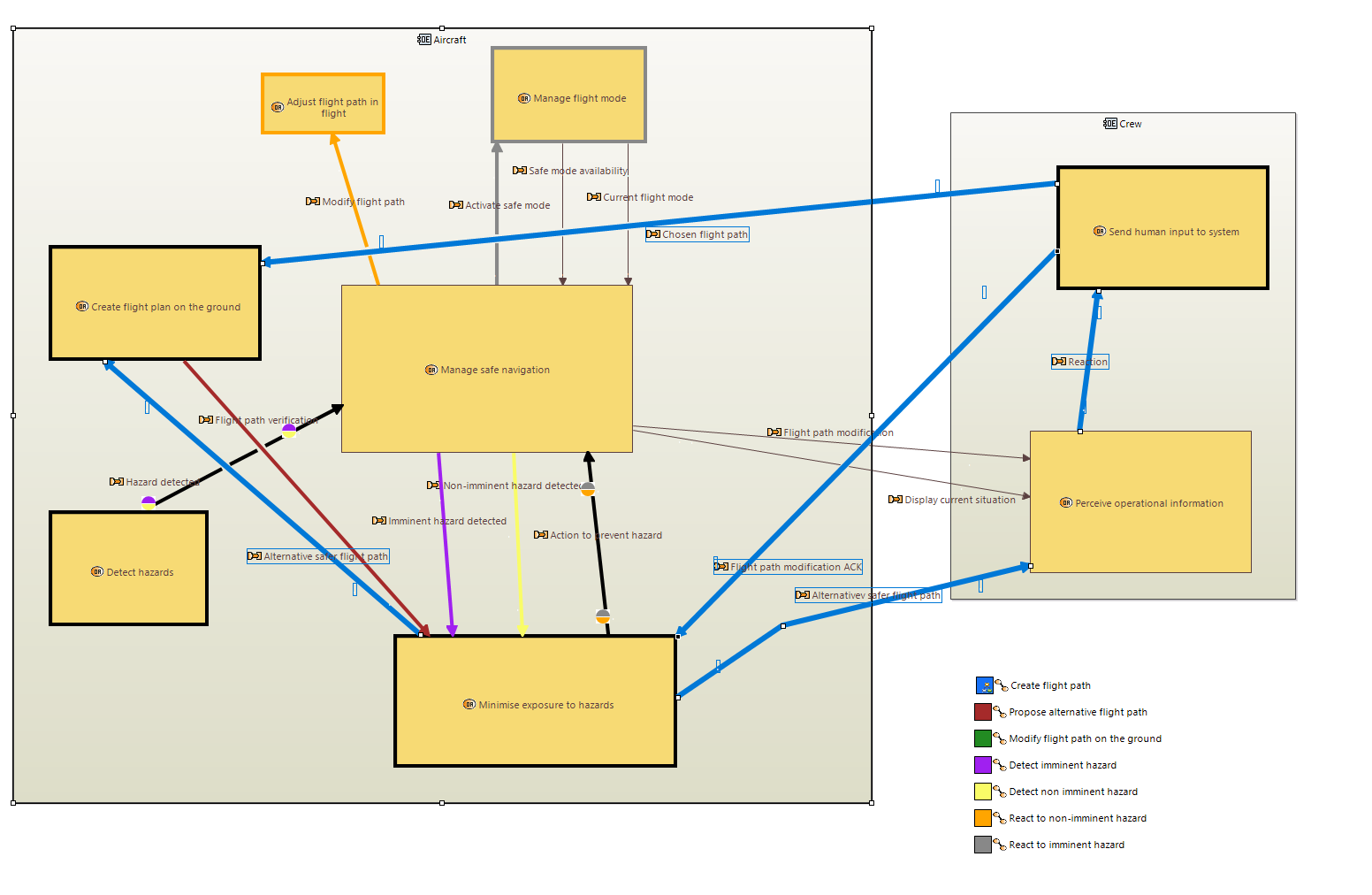
I then created the OAB as you suggested, discovered new activities, and found new higher-level ways to group them.
Im - 3
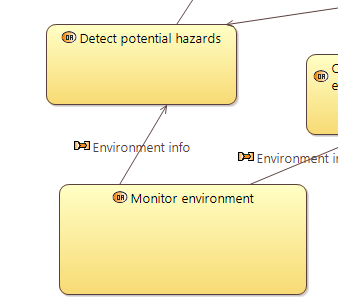
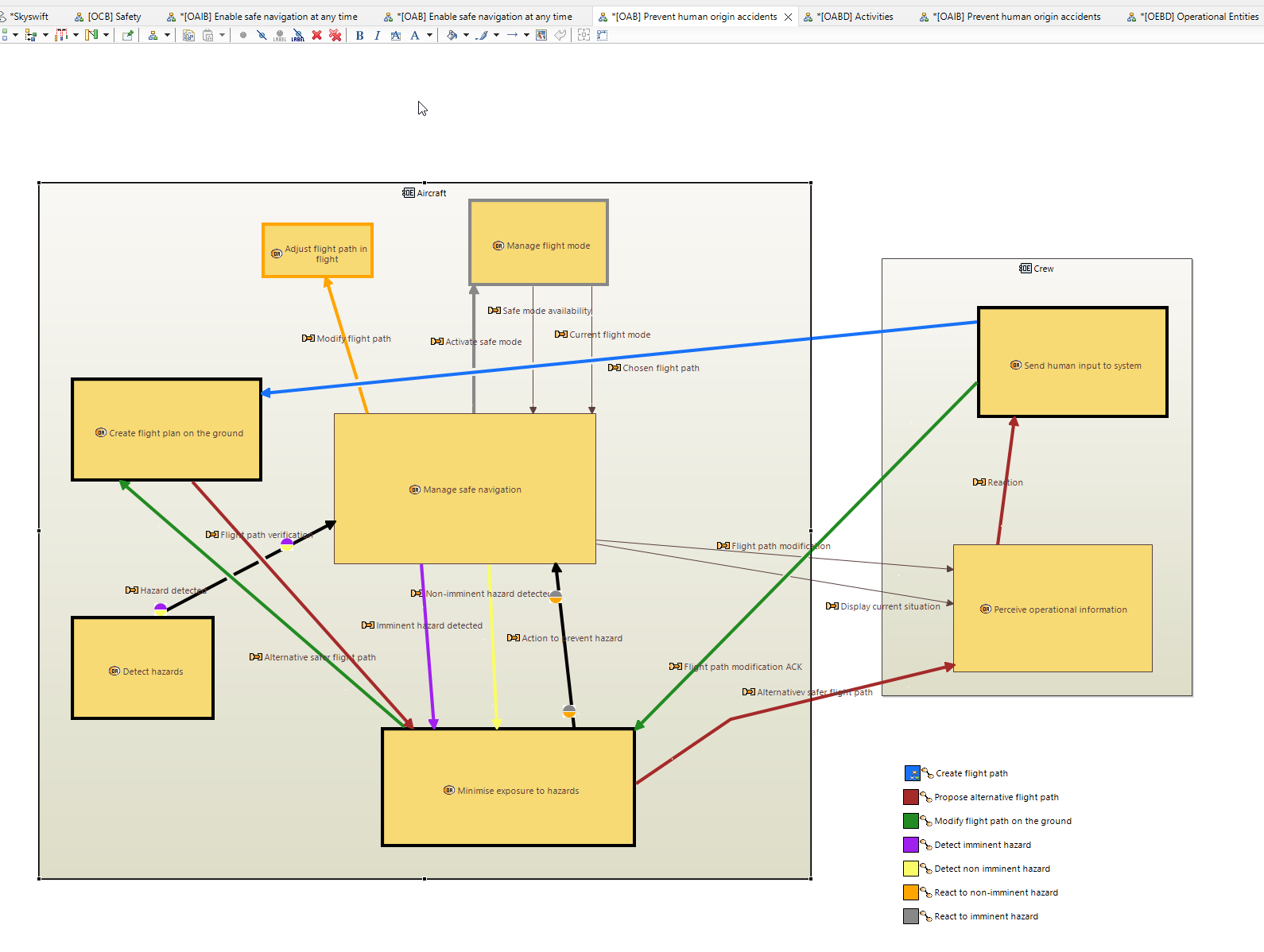
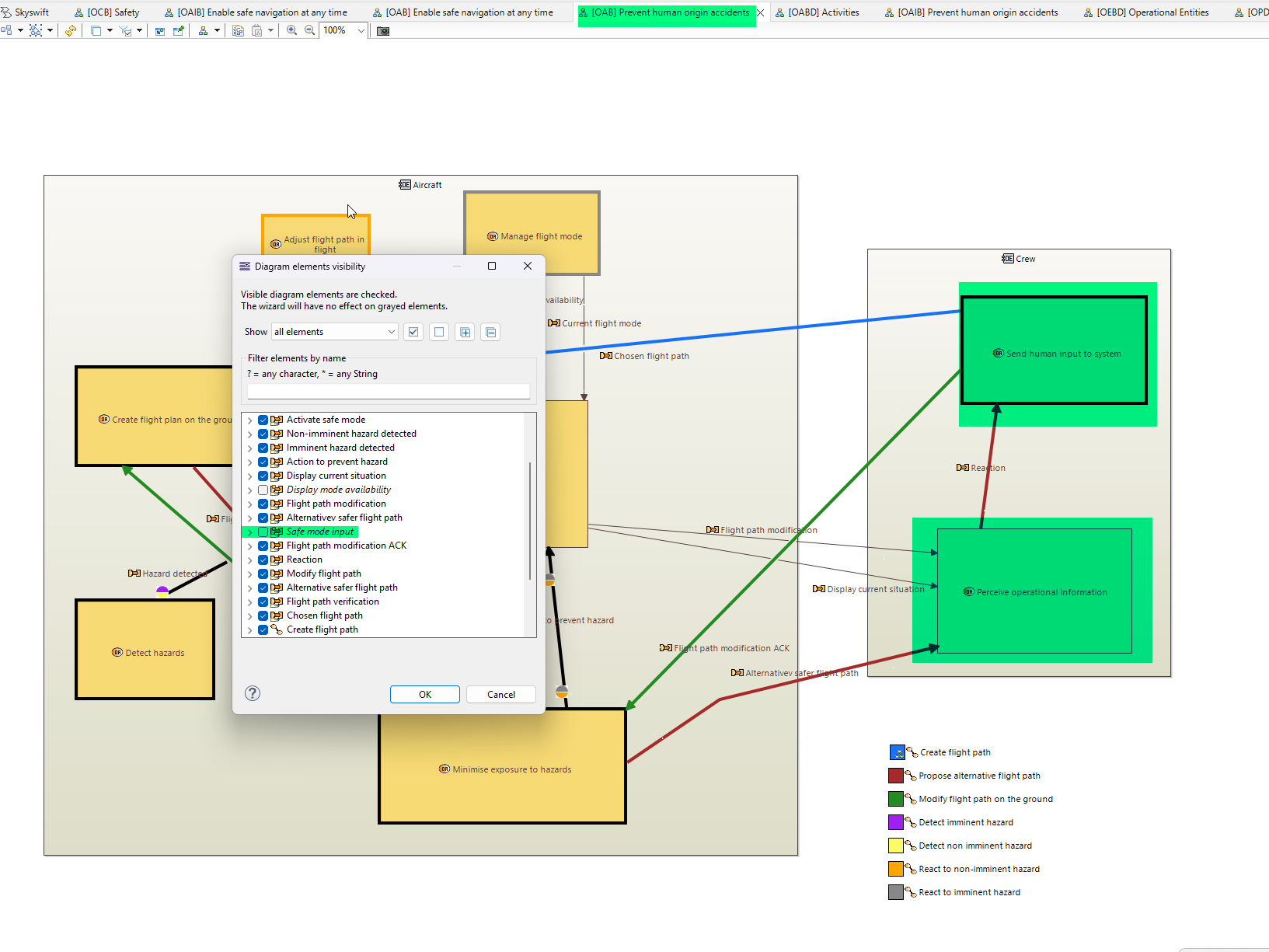
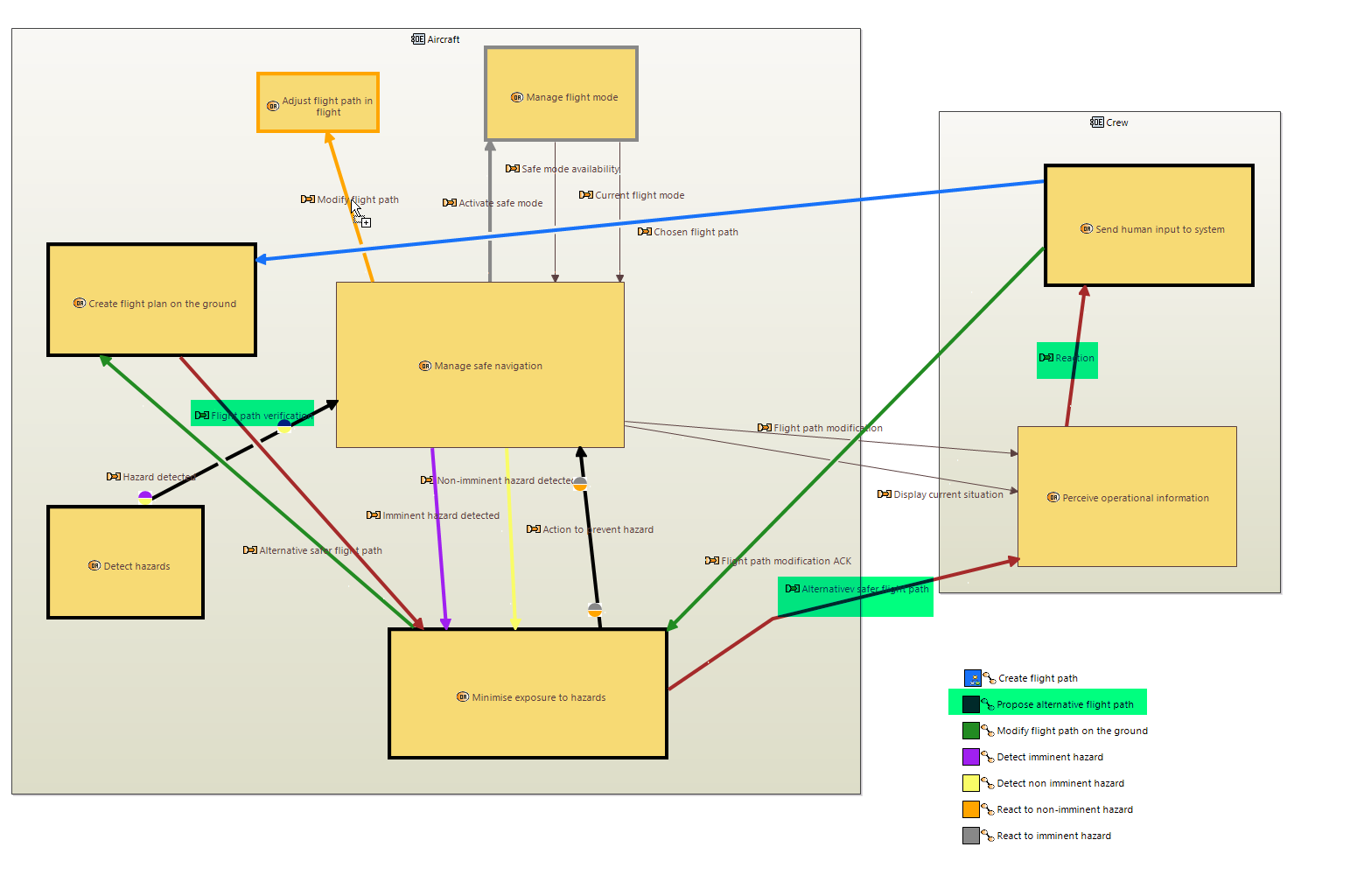
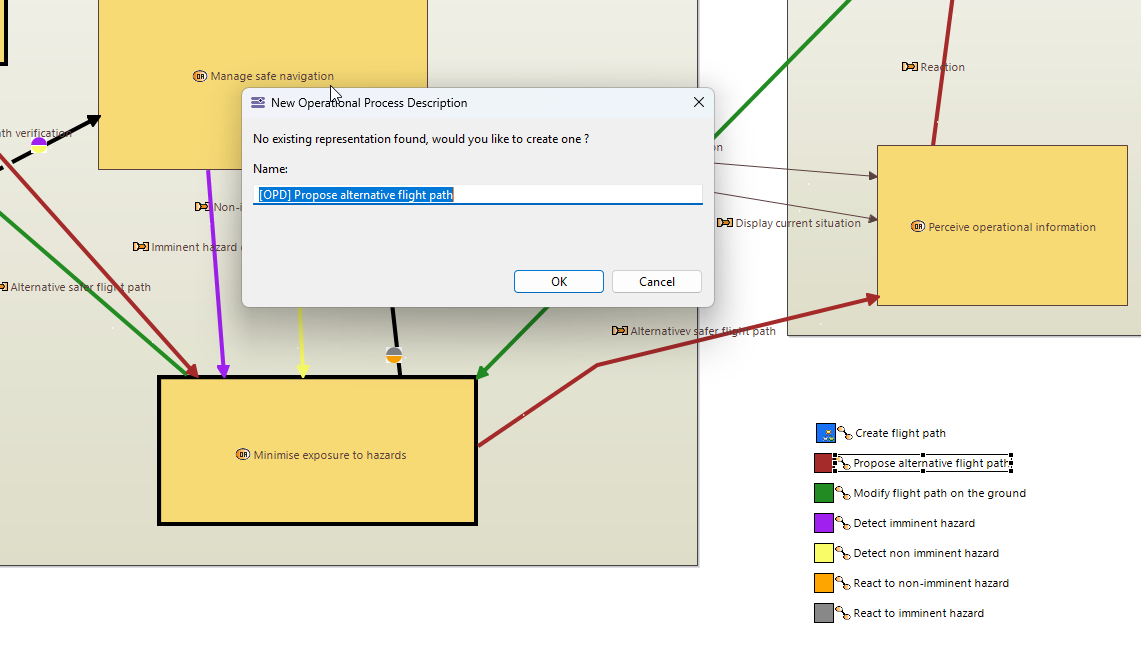
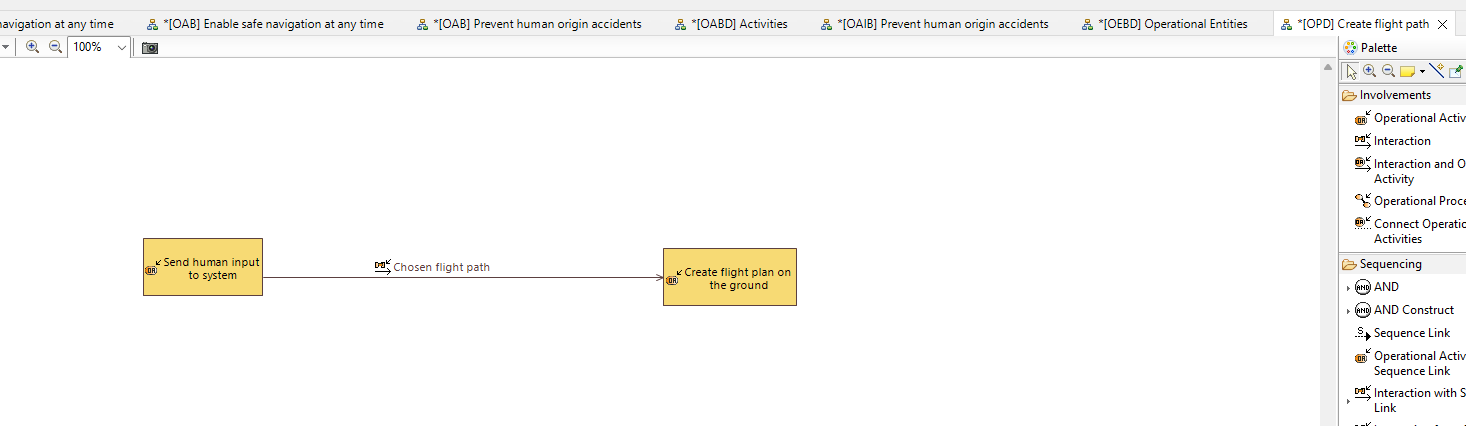
And then I defined the OP, in which, as you said, I can define Exchanged Items to describe in more detail the information I want to share.
Im 4
Then I linked the OP to the capability. Now, I have 4 OP describing my capability “Enable safe navigation during flight”.
Second part of the answer
But now, it’s difficult to know where I should stop in the OA. Three things come to my mind now :
- Before changing flight mode, the system should verify if the chosen flight mode is available at the moment.
- If multiple hazards are detected by the system, it should have a way to prioritize the information send to the pilots
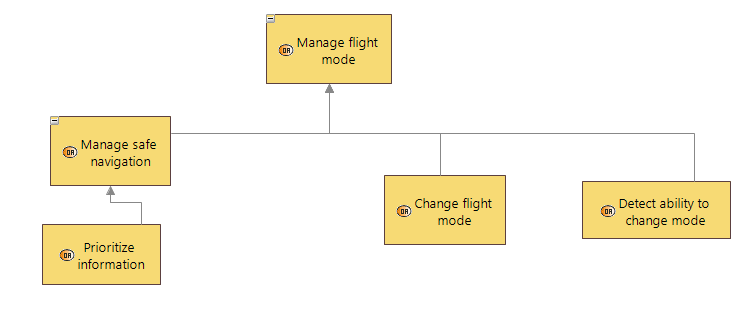
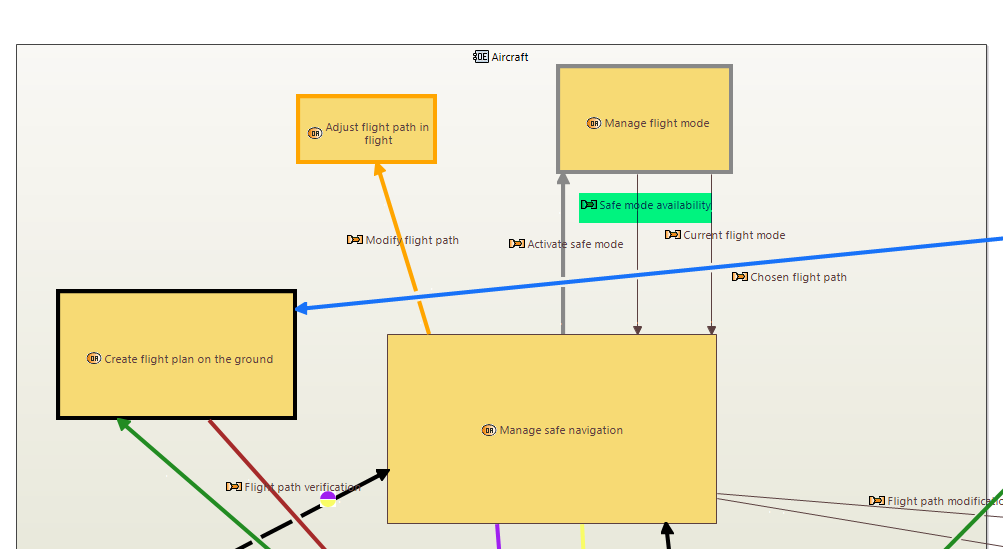
- The “manage safe navigation” activity could be a sub-activity of an higher acitvity such as “manage flight mode activity’.
Like this, by example :
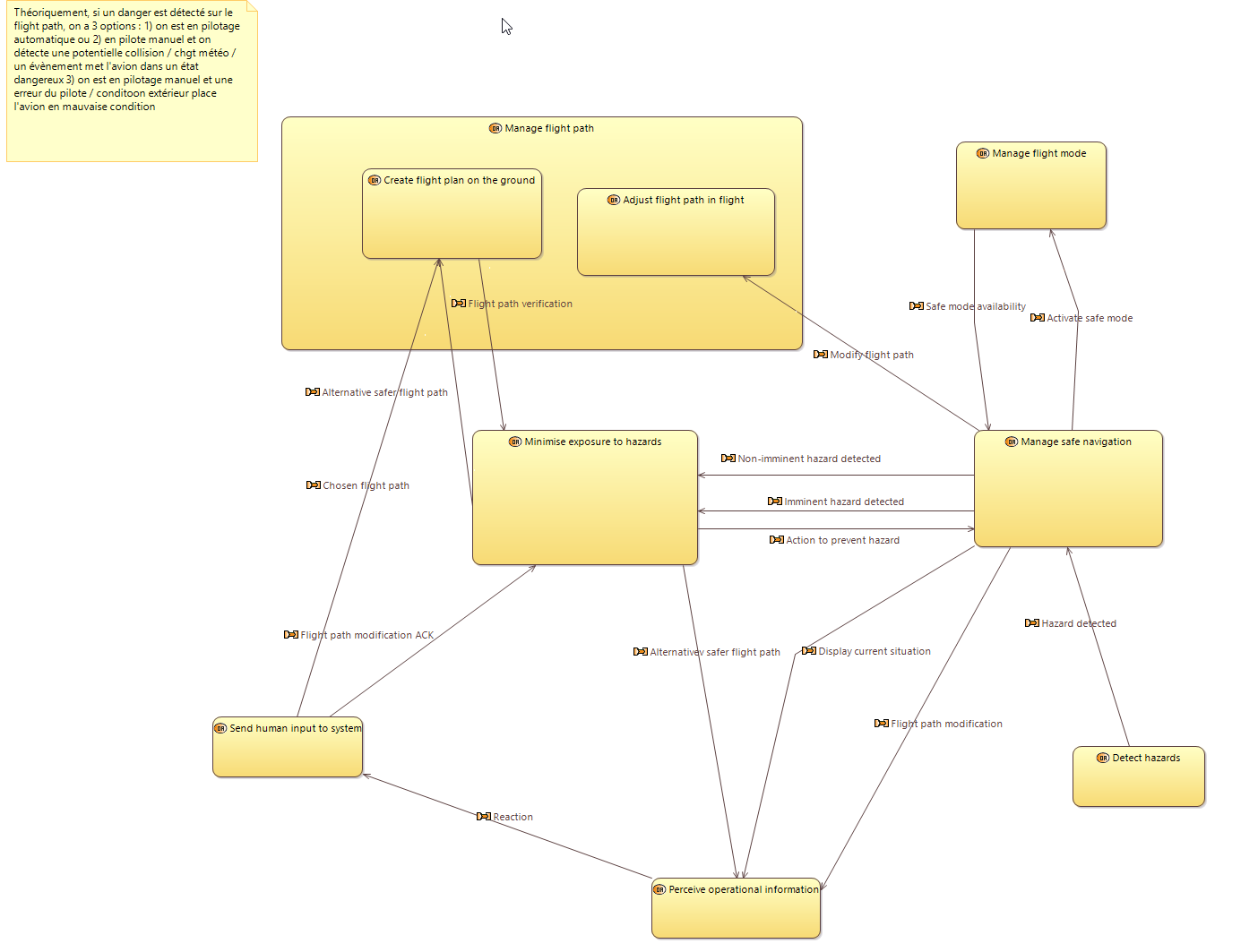
Im - 5
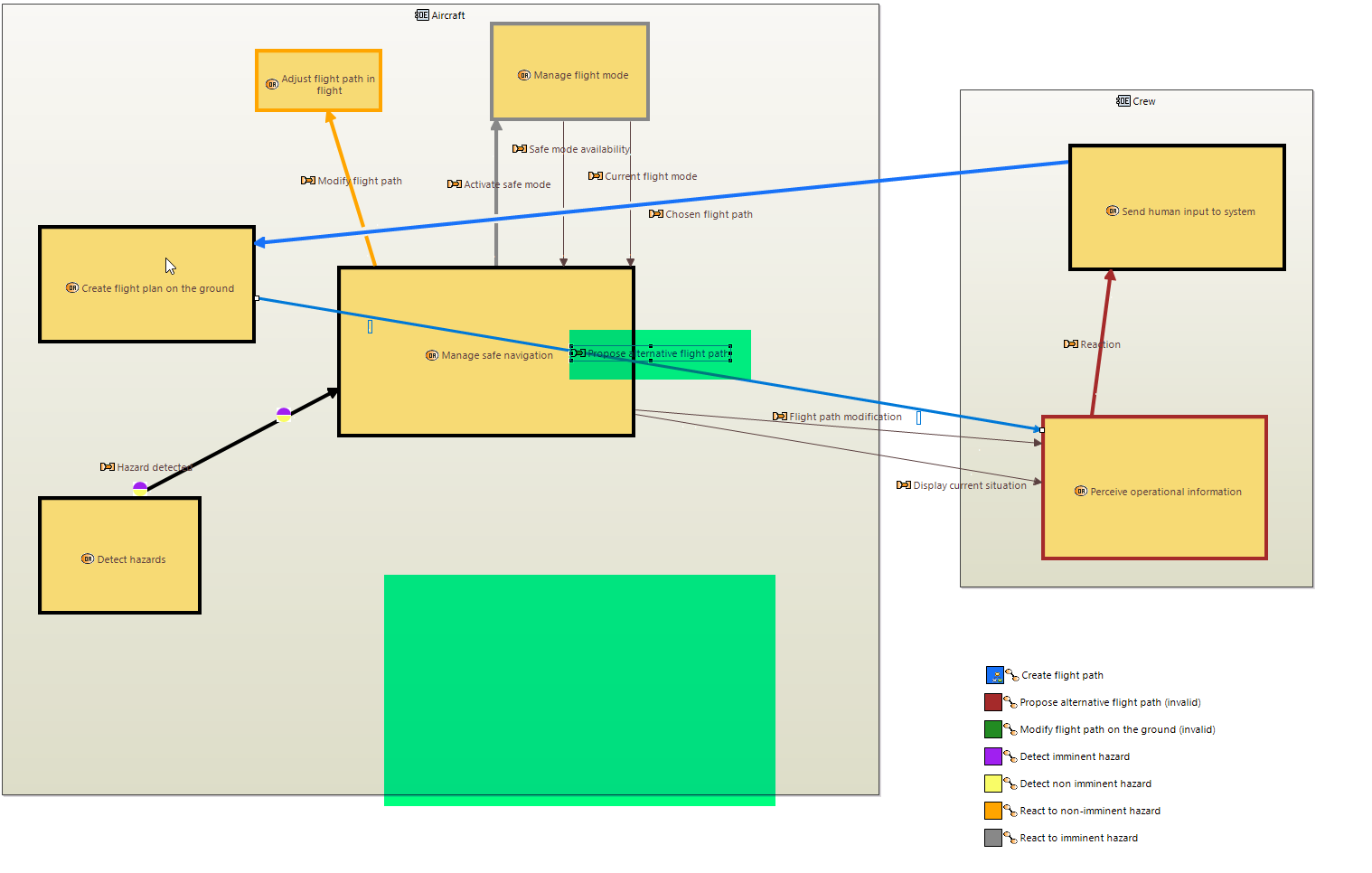
But now, in the OAB, should I describe it more then ?
Im - 6
But then, the OP becomes invalid and I can’t create an interaction between “Prioritze Information” and “Manage safe navigation” because they are parent and child.
So am I wondering in this case if I should create more sub-activities for the Manage safe navigation activity :
- Receive input of a safe type –> but then you could also imagine creating a higher level activity which “receive input”, in which you have a sub-activity saying receive input of a safe type.
- Send safe mode input
- Send hazards information
- …
and then the high-level activity “Manage Safe Navigation” would become a “ghost”: it would not interact with other high-level activities, since activities like “Send input to system” or “Perceive operational information” would instead interact with its child lower-level activities. Am I getting this right?
Then maybe I am going to far?
–> But as you said “But all this becomes more important at the SA level when working on the Functional analysis of your system. It is good that you are trying to get this right at the OA level since it will be a very similar process at the SA level. But often the OA level is not as “rich” at the SA level. Unless you want to spend months on doing a CONOPS.” –> so it’s difficult to know where to stop and not starting the “system analysis” in the “operationnal analysis”.
So maybe I should only consider high-level activities in the OA, and if I come up with ideas for lower-level activities, I write them down in the OA but actually use them in the SA… I’m not sure!
Also, if I end up creating more sub-activities in the SA, since it’s a top-down approach, they won’t go back into the OA, right (after the transition process).So when you said: “What I am saying is that, if you end up with a flat list of leaf activities, you have missed a step in creating your functional architecture. Deciding whether you need more sub-activities is a question I cannot really answer.” → by “end up,” you mean in the SA? So is it important to have a completely finished OA before moving on to the SA? It’s iterative, but only within each step, not across the entire process? (Unless you want to change the stakeholders’ needs).
I really appreciate the time you’re taking for this, and I apologize for the long answer. I’m trying to understand the software and the method and getting it right from the beginning.
Best regards,
Thomas