Hi,
is it now possible to delete objects using Py4C (like OwnedDeploymentLinks …)?
thanks for your answer
d
Hi,
is it now possible to delete objects using Py4C (like OwnedDeploymentLinks …)?
thanks for your answer
d
You can use:
EObject.delete_e_object(myOwnedDeploymentLinks)
or
EObject.delete_all_e_objects([myOwnedDeploymentLinks1, myOwnedDeploymentLinks2])
It should update other element of the Capella model. But you might want to double check this.
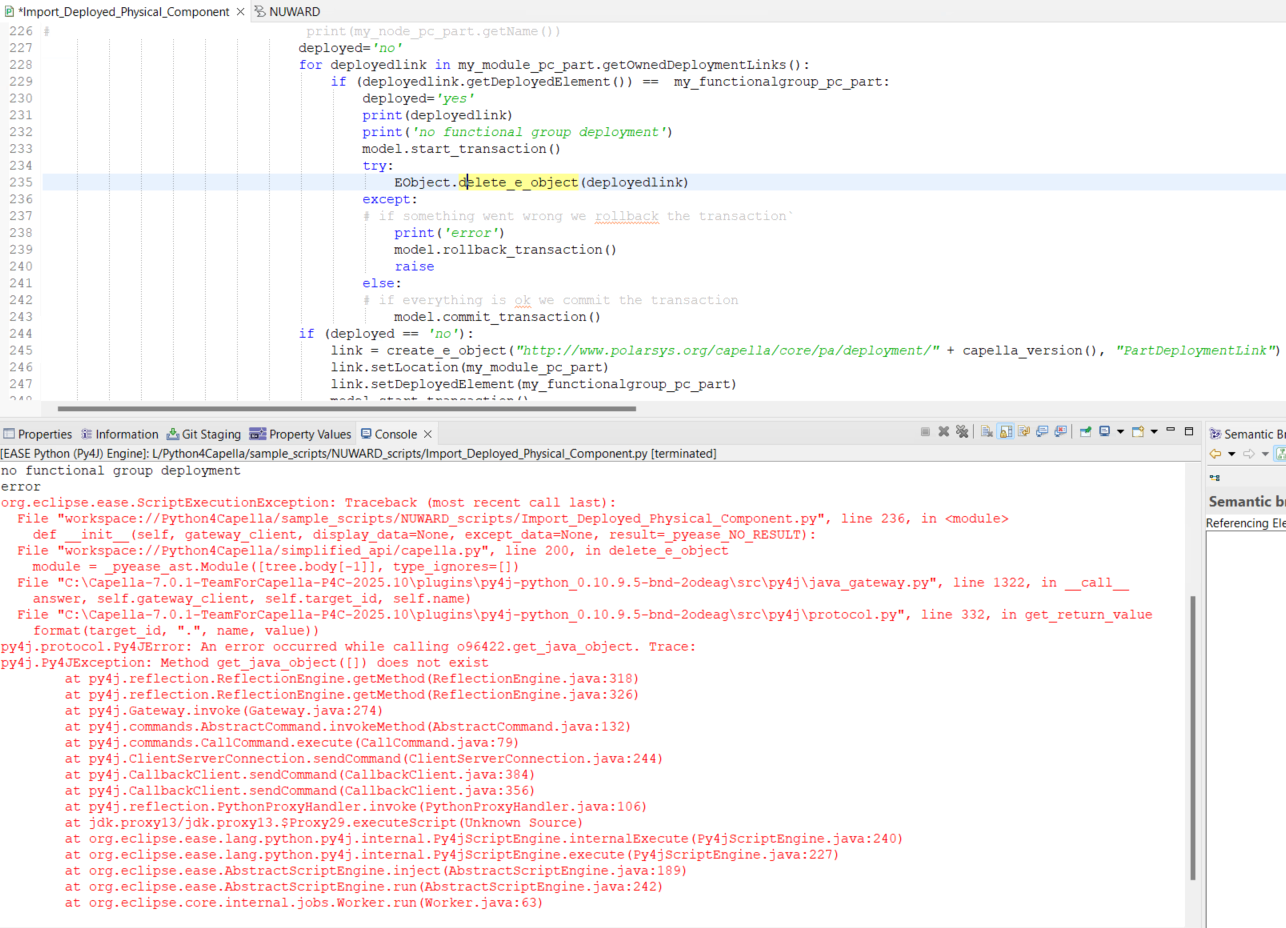
You passed a Java object. You can wrap the java object in a Python object CapellaElement(myOwnedDeploymentLinks).
too strong for me!!!
it works, thanks
it’s difficult to navigate between java object et python ones…
regards
d
You can have a look at the tips and tricks section of the documentation that explains this kinds of errors and how to navigate between the Python/Java APIs. It can help, but yes it takes some practice.
Hi Yvan,
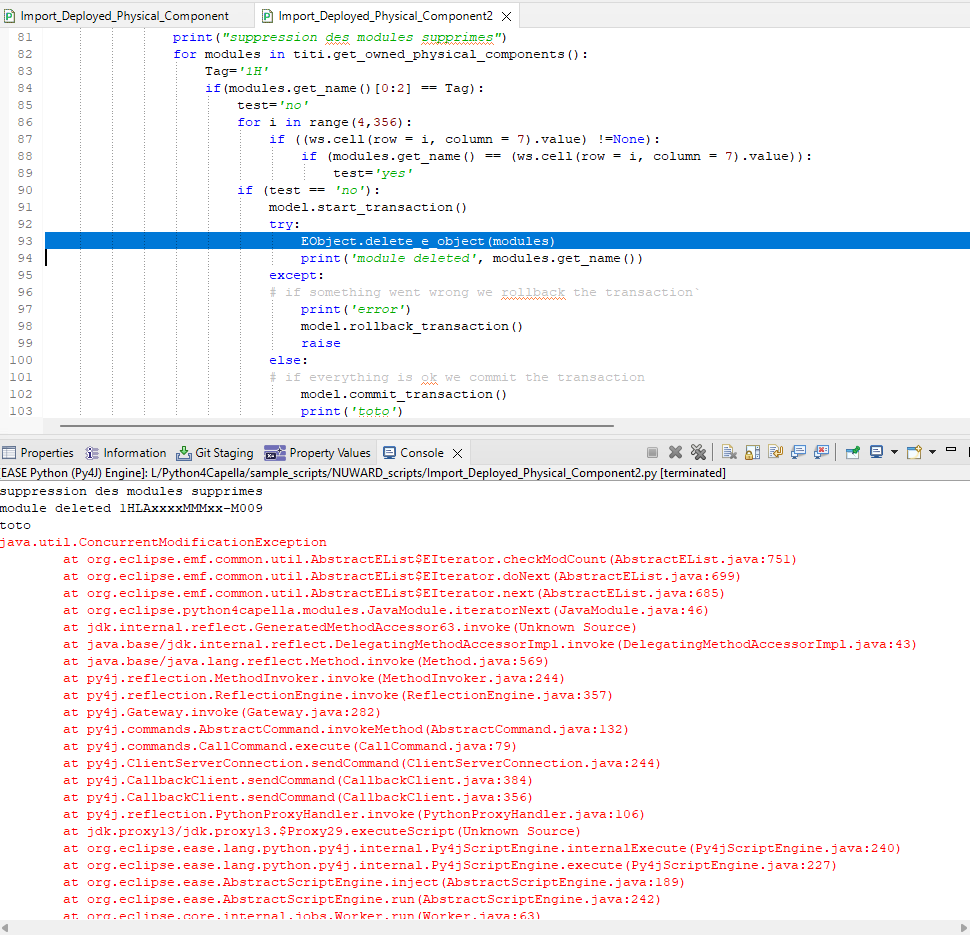
I’m so sorry, I have another error that I don’t understand when I try to remove physical Components
I also try with “EObject…(CapellaElement(modules))”
Do you have an idea?
d
You are looping over a list of element and you are deleting an element of this list inside the loop which is forbidden by Java. You can add the element for deletion to a list and delete them after outside of the loop.
to_delete = []
for element in elements:
    ...
    to_delete.append(element)
    ...
EObject.delete_all_e_objects(to_delete)Hi,
Thanks for your suggestion.
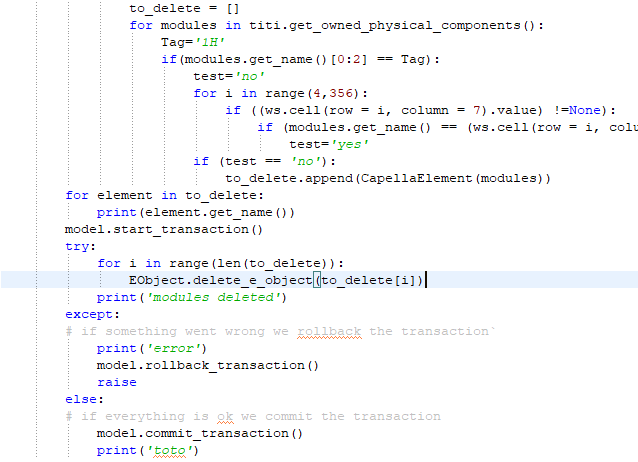
Nevertheless, I had an error:
but regarding your previous advice, it works in scripting:
Have a nice day
d
The error message says you are passing a Python list to the method delete but the code shows you are passing one element… You might want to check the type of to_delete[i]:
print(type(to_delete[i]))